
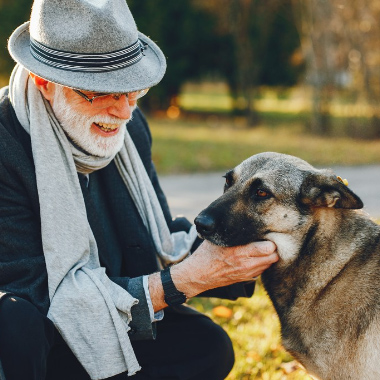


Interacting with animals have clear therapeutic benefits for those who suffer from Alzheimer’s Disease and other forms of dementia. I am sure that most of the benefits discussed below will be obvious to anyone who has ever kept a pet. I will discuss four specific benefits, but of course, there are many others.
Physical Activity
One of the natural things that people do with their pets is play with them. Dogs and cats, in particular, tap into this common instinct. Some might even be inspired to take a dog for a short walk. Better that physical activity be play instead of work.
Communication
Many who suffer from Alzheimer’s or dementia have difficulty with verbal communication. There can be a positive impact from the deeper non-verbal communication that tends to take place between humans and animals. This can sometimes make verbal communication easier or more likely to happen for those with dementia.
Interaction with animals has also been known to spark actual conversations. People recall the pets they used to have and want to talk about them and tell others about them.
Emotional Support
Interacting with animals has a calming impact on people and helps lesson the symptoms of depression and anxiety. Animals tend to offer unconditional love for and attention to the people that care for them. Even just petting and stroking an animal tends to bring peace and comfort to the individual.
Caring for a pet even when it is not a full-time live-in situation tends to tap into a person’s nurturing instinct. Ultimately it’s nice for the person to feel needed.
Nutritional Benefits
I was amazed to discover that genuine nutritional benefits have been documented in those with Alzheimer’s who have spent time caring for some fish.
“In a 2002 study conducted by researchers at Purdue University, fish aquariums were used with 62 Alzheimer’s disease patients on a daily basis over a two week treatment period, and then weekly for a six-week period. The outcome: Nutritional intake increased during the first two weeks, and continued to do so during the next six week period. The patients gained an average of 1.65 pounds, and required less nutritional supplementation, thus reducing the overall costs of their care.”

How to Make Animal Therapy Work
There are alternatives to patients keeping a full-time pet when that is not a realistic option. An animal can be brought to them at their home on regular or semi-regular basis. You should call ahead to make sure the person is prepared for the pet to come over.
Morning and early afternoon tend to be the best time for a visit with an Alzheimer’s or dementia sufferer. By late afternoon (s)he might be too tired for a visit. In those circumstances, the benefits of a visit might be minimal at best. It’s also best to determine what appears to be a reasonable amount of time to visit the particular patient. A short time might be best for some while some seem to enjoy a longer visit.